Stakeholders Call for Digital Transformation That Bridges Business and Digital Rights in Uganda

By CIPESA Writer |

Uganda is embracing the opportunities offered by Artificial Intelligence (AI) and Digital Public Infrastructure (DPI) as drivers of national development. Both promise efficiency, improved service delivery, financial inclusion, and economic growth. However, as the country advances its digital transformation interests, questions linger on the adequacy of safeguards for citizens especially where business and rights intersect.

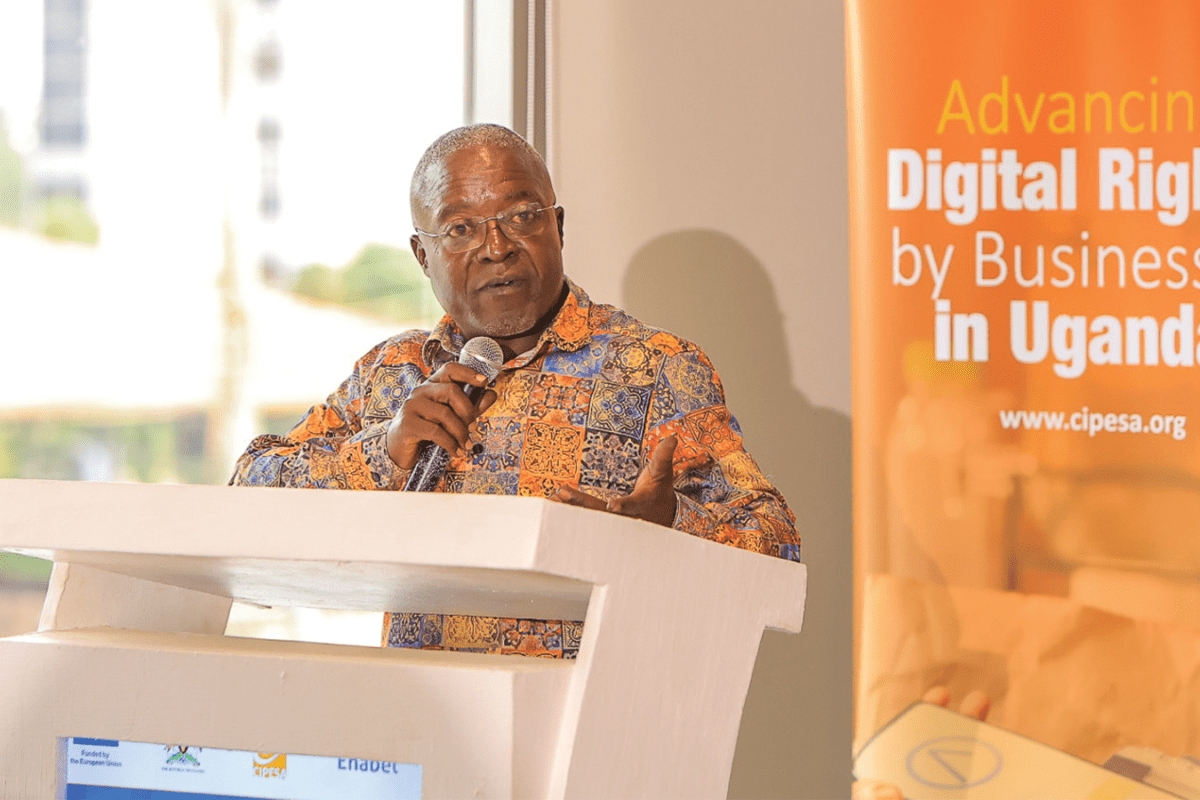
These questions were at the centre of a  High-Level Multi-Stakeholder Dialogue on Business and Digital Rights convened by the Collaboration on International ICT Policy for East and Southern Africa (CIPESA)  on May 7, 2026, under the Advancing Respect for Human Rights by Businesses in Uganda (ARBHR) project, supported by Enabel and the European Union (EU). The dialogue brought together 81 individuals representing government officials, civil society actors, private sector representatives, researchers, and digital innovators to reflect on the growing recognition that digital transformation is not simply a technical process, but also a governance and human rights issue that demands transparency and accountability.

The discussions at the dialogue revealed a tension between innovation and human rights. Systems such as digital identity (ID), payment platforms, and data-sharing frameworks   centralise enormous amounts of personal data and are reshaping power relationships between citizens, the government, and corporations.

Participants noted that in the absence of strong governance frameworks, these systems can enable exclusion, surveillance, and misuse of personal information. Further,  concerns were raised about fragmented systems across government agencies, weak interoperability, and limited public awareness regarding how personal data is collected, stored, and shared.

Meanwhile, as emerging technologies such AI take hold in the country,  the Uganda National AI Landscape Assessment positions  AI as a key digital technology driver to drive economic growth.

However, the Assessment documents the absence of a dedicated AI policy and regulatory framework, a shortage of AI skills, and insufficient collaboration between academia and the technology sector. Similarly, like its counterpart governments across Africa, Uganda is increasingly investing in DPI systems including digital ID and payment systems,  as well as data exchange frameworks. DPI is being positioned as a key pillar of digital transformation strategies across Africa. However, DPI  systems remain heavily reliant on public data and algorithmic decision-making. Thus, if   designed and deployed without sufficient citizen participation, independent oversight, legal safeguards, and alignment with the public interest, they risk becoming tools of exclusion, exploitation, and foreign dependency.

Various efforts related to the adoption of emerging technologies are underway.  Ambrose Ruyooka, the Assistant Commissioner at the Ministry of ICT and National Guidance, Uganda noted that the Ministry is taking a cautious approach to regulation by prioritising standards, policy guidance, and institutional learning before introducing binding laws. This includes efforts to domesticate the UNESCO Recommendations on the Ethics of AI and a Readiness Assessment process. The dialogue also came on the heels of the Ministry’s call for stakeholder input to the National AI and Emerging Technologies Strategy – signaling a growing policy focus on responsible digital transformation.

Further he stressed that in the midst of AI, stakeholders should not be “passive consumers” of the digital economy but actively “participate in shaping it” while pointing out that participation requires local technical capacity to “build, operate and audit” systems such as AI and DPI systems independently.While government efforts are laying the foundation for AI governance, businesses also have an obligation to innovate responsibly and adopt robust human rights due diligence processes to support regulatory compliance and foster trust and sustainability.

At a broader level, the dialogue demonstrated how digital rights are increasingly intertwined with economic rights and social justice. As a result, corporate responsibility can no longer be limited to traditional labour or environmental concerns. Companies are now expected to consider how their digital operations affect privacy, equality, freedom of expression, and access to information.

This shift is especially significant for Uganda’s small and medium enterprises (SMEs), many of which are digitising rapidly but often lack the resources and expertise needed to manage cybersecurity and data effectively.

Presentations from implementing partners, including the Private Sector Foundation Uganda (PSFU), Evidence and Methods Lab (EML), Wakiso District Human Rights Committee (WDHRC), Boundless Minds, and Girls for Climate Action (G4CA), highlighted both the scale of the challenge and the potential for practical intervention. Partner interventions on digital rights and cybersecurity are strengthening awareness and practices among entities – both rural and urban.

The European Union’s (EU) Commitment to Human Rights in Business

Laurianne Comard, Programme Officer at the EU Delegation to Uganda,  noted that the EU and its member states are currently among Uganda’s largest investors in the private sector, with over 1.4 billion euros deployed to foster sustainable economic growth and high-value exports. Specifically, she stated that the EU supports Uganda’s National Action Plan (NAP) on Business and Human Rights with over 20 billion Uganda Shillings, with a specific focus on strengthening human rights practices in business operations, particularly around labour standards and women’s rights.

Course-Correcting on Inclusion

Participants also noted that public participation in digital governance remains limited. Several civil society actors argued that consultations around national AI strategy have not been broad enough, particularly for rural communities, labour unions, youth groups and persons with disabilities. Frameworks developed without broad public engagement risk lacking legitimacy and failing to address the lived realities of those most affected.

The dialogue also reflected on the NAP on Business and Human Rights and the consultative processes underpinning its evaluation and development of NAP II. Lydia Nabiryo, Assistant Commissioner at the Ministry of Gender, Labour and Social Development, acknowledged that the government is actively working to broaden participation in the NAP’s revision.

Her remarks were a candid recognition that the first NAP, while a significant milestone, left representational gaps, and that those gaps are now being deliberately addressed. She noted, “If you have noticed this time round, we are having a more inclusive dialogue with stakeholders that were not necessarily represented in the first NAP. So, not only is the government evaluating, but we’re also course correcting.”   

Participation should not only be limited to policy processes. Shane Ssenyonga, an innovator, pointed out the need for collaborative spaces that support entrepreneurs and businesses to build scalable solutions that are responsive to social, cultural, and economic realities.

Recommendations for Action

The dialogue called for stronger human rights safeguards and access to remedy within digital transformation strategies and business operations. The strategies should be in harmony with existing digital laws and policies and strengthen oversight and enforcement by relevant institutions. For businesses, adoption of forward looking internal policies and risk management practices was emphasised to ensure trusted deployments and reduce barriers to uptake. Advocacy, documentation, and digital literacy interventions remain critical to public education and compliance monitoring.


CIPESA Annual Report 2025 Highlights Agility in A Changing Funding and Policy Landscape

By CIPESA Writer |

The Collaboration on International ICT Policy for East and Southern Africa (CIPESA) is pleased to present its 2025 Annual Report. Made possible by a wide network of collaborators across Africa and beyond, our work reflects a year marked by agility, resilience, and responsiveness amid rapid shifts in technology, policy, and governance.

Across Africa, governments rapidly expanded the use of artificial intelligence (AI) and Digital Public Infrastructure (DPI), including national digital ID systems, surveillance tools, and e-government platforms, reshaping how power is exercised, services are delivered, and citizens engage with the state. At the same time, digital platforms remained central to political and civic life, amplifying both civic participation and manipulation.

Through our research, advocacy, and partnerships, the report highlights how digital transformation is reshaping everyday life and why protecting civic space and digital rights remains more important than ever.

Over the year, our work moved beyond who participates in digital governance across Africa to strengthening the quality and influence of that participation. We are deeply grateful to all our Network of allies whose support made our 2025 work possible.

In a year marked by significant shifts in the global funding landscape, their continued trust and commitment to digital rights in Africa was both enabling and affirming.

We remain committed to advancing an open, inclusive, and rights-respecting digital ecosystem in Africa, confident that when evidence, advocacy, and collective action come together, meaningful change is possible. Read more on the report below.

CIPESA Annual Report 2025

Zimbabwe’s National AI Strategy: Policy Lessons for Africa

By Edrine Wanyama |

Zimbabwe recently adopted its National Artificial Intelligence (AI) Strategy 2026–2030 (AI strategy)  to guide digital technology and transformation in the country. The strategy aims to accelerate development, enhance industrialisation, and improve service delivery in sectors such as health, finance, agriculture, education and public administration. The strategy emphasises building local data infrastructure as opposed to relying on foreign data storage infrastructure while promoting an AI governance approach grounded in Ubuntu, human rights, accountability, transparency and inclusivity.

However, an important question is whether Zimbabwe’s approach offers useful lessons for other African countries developing national AI strategies.

Lessons for Other African Countries

The country’s AI strategy is organised around six pillars that together map a practical path for AI adoption and deployment. First, AI talent and capacity development is essential for ensuring that institutions have the skills needed to implement AI effectively. Second, AI infrastructure and computational sovereignty are necessary for ensuring digital and data sovereignty. Third, AI adoption and service transformation are critical for supporting the integration of AI across public and private sectors to improve their productivity, accountability and transparency.

The fourth pillar, AI governance, ethics and regulation, is essential for building public trust and creating a framework that supports responsible innovation. The fifth pillar, AI research, development, and innovation, can drive investments, expand knowledge production and strengthen academic output. The sixth pillar, strategic international collaboration, presents an opportunity for global partnerships with key players and stakeholders, technology exchange, and potentially greater investment.  

Consequently, these pillars offer useful lessons for other countries seeking to harness AI for socio-economic transformation while protecting data rights and data sovereignty.

Alignment with the African Union (AU) AI Strategy

Zimbabwe’s AI Strategy reflects several priorities contained in the AU Continental Artificial Intelligence Strategy, particularly the emphasis on coordinated AI governance, digital sovereignty, and sectoral innovation. Zimbabwe’s strategy aims to harmonise the deployment and use of AI across sectors such as health, finance, agriculture, education and public administration through common governance benchmarks for AI governance. If implemented effectively, these goals could help to address digital neo-colonialism, an issue that has been dominant in Africa’s technological space.

The Strategy also places strong emphasis on AI as a tool for socio-economic development, aligning with Agenda 2063 and the Sustainable Development Goals (SDGs), particularly in sectors such as health, agriculture, and education. The Strategy promotes the deployment of AI to improve agriculture through crop disease prevention, as well as mining and mineral development, which is consistent with the AU AI strategy’s priorities on resource optimisation and climate resilience.

However, Zimbabwe faces significant governance and implementation challenges. The country scored 0 in the 2024 Global Index on Responsible AI Governance, highlighting the gap between policy ambition and institutional readiness. This means it requires major actions to implement the strategy, such as the establishment of robust legal safeguards, accountability mechanisms, oversight institutions, and rights-based governance frameworks, which are also emphasised within the AU strategy.  Other African countries can draw lessons from Zimbabwe’s approach, such as the need to complement AI strategies with stronger governance capacity, clearer regulatory safeguards, and more coherent data governance frameworks to support responsible and accountable AI deployment.

UNESCO Guidance on AI

The UNESCO Recommendations on Ethics of Artificial Intelligence, adopted in 2021, is a global normative framework that promotes human rights, including human dignity, transparency, fairness, human oversight in AI systems, and democratic participation. It also provides practical policy action areas covering issues such as data governance, gender, education and research, health, and social wellbeing.

While the UNESCO Guidance is emphatic on ethical and privacy considerations, Zimbabwe’s strategy falls short. Ambitions to integrate AI into public service delivery sectors such as education, health, and public administration will require stronger safeguards to ensure alignment with the human-centric principles articulated in the UNESCO framework. In the age of AI, data security concerns, intellectual property rights, algorithmic bias, and institutional accountability are central to responsible deployment of AI and require clearer policy and regulatory attention.

Similarly, the UNESCO Guidance warns against the use of AI in a manner that undermines democratic participation, civic engagement, and collective decision-making. This is especially important in contexts where surveillance technologies such as facial recognition, drone monitoring, communication tracking, and social media surveillance are deployed without clear safeguards or independent oversight. Zimbabwe, like several other African countries, has invested in AI-enabled infrastructures, such as the “smart city” systems to monitor and surveil citizens in ways that are opaque and lack clear accountability mechanisms.

As African countries continue developing national AI strategies and governance frameworks, they must strive to ensure that the deployment of AI is transparent, publicly accountable, and pays close attention to ethical and human rights standards. Without these safeguards, AI risks reinforcing exclusion, surveillance, and digital authoritarianism rather than advancing development.

Conclusion

Zimbabwe’s adoption of an AI Strategy is an important step toward advancing tech-enabled digital and socio-economic transformation. It also reflects the country’s intent to align national priorities with the African Union’s vision for AI-driven development across the entire continent. However, for such strategies to be effective and legitimate, they must be grounded in ethical and human rights standards laid down in regional and international benchmarks.

Rethinking Platform Design and Accountability to Combat TFGBV in Africa

By Alice Aparo |

Africa’s rapid digitalisation, spanning e-commerce, online services, and digital infrastructure, has been accompanied by a persistent rise of Technology-Facilitated Gender-Based Violence (TFGBV). African women and girls are exposed to several forms of TFGBV, including online harassment, algorithmic discrimination, and deepfakes that prevent equal participation in online spaces.

To commemorate this year’s International Women’s Day, the Collaboration on International ICT Policy for East and Southern Africa (CIPESA) convened a webinar themed Advancing platform accountability for women’s online safety in Africa to discuss efforts to enhance women’s online safety and hold digital platforms accountable.

A key insight from the discussion was that the rise of TFGBV in Africa is amplified by platform design, limited legal enforcement, weak moderation of content by digital platforms, and a poor system for reporting abuse and harmful content. The low levels of digital literacy, poor redress and appeals mechanisms, and lack of awareness among policymakers were also cited. Many of those who experience online abuse struggle to obtain justice and, in most cases, turn to self-censorship instead. This ultimately shrinks women’s voices in public discourse.

Further, online harm is often misframed as an individual responsibility, whereas it is largely enabled by platform design features such as anonymity and algorithm-driven content amplification that support harmful behaviour and accelerate the spread of harmful content. In her remarks, Barbra Okafor, founder and Lead Strategist at The Agency Lab, said major digital platforms prioritise “profit and scale over user safety”, adding that features like reposting and seamless sharing are built for viral amplification, not user protection.

Okafor added that when content that qualifies as harassment is posted, algorithms interpret the resulting engagement as “interest” and accelerate the distribution of the abuse rather than introducing safeguards. She described these platforms as “mini-gods” that have assumed regulatory power without corresponding accountability, making online user safety secondary to profit.

Gaps in content moderation, the limited inclusion of African linguistic expertise, and weaknesses in platform design and legal frameworks raise serious concerns about technology companies’ capacity to respond to harmful content in a timely and context-sensitive manner.

The increasing reliance on Artificial Intelligence (AI) for content moderation, yet it is largely trained on Western datasets, means it continues to struggle to detect harassment expressed in African languages or to interpret culturally specific slurs. This leaves women participating in public discourse exposed to unchecked, gendered insults and coordinated digital attacks.  

While AI-based features such as deepfake detection, content filters, and automated tools such as Safety Mode and Limits exist, their effectiveness is uneven across African contexts. These measures are further constrained by structural challenges, including limited investment in local content moderation and weak legal enforcement systems.

Marie-Simone Kadurira, an independent feminist researcher and panelist, noted that digital violence often mirrors and amplifies offline abuse, reinforcing patriarchal norms through technology. This perpetuates existing gender power imbalances and harmful social norms. She added that African women, particularly those in public-facing roles such as journalism, activism, or politics, face heightened, systemic harassment.

Despite the existence of cybersecurity and data protection laws in many African countries supported by regional instruments such as the African Commission on Human and Peoples’ Rights (ACHPR) Resolutions on developing Guidelines to assist States monitor technology companies in respect of their duty to maintain information integrity through independent fact-checking (ACHPR/Res. 630 (LXXXII) 2025) and the Resolution on the protection of women against digital violence in Africa (ACHPR/Res. 522 (LXXII) 2022) – addressing TFGBV remains a persistent problem across the continent. The two resolutions emphasise the obligation of African states to protect individuals, particularly women and girls, from digital harms, including online harassment, cyberstalking, non-consensual sharing of intimate images, and other forms of abuse.

Dr. Abudu Sallam Waiswa, Head Litigation, Prosecution and Legal Advisory at the Uganda Communications Commission (UCC), said effective legal enforcement remains challenging because most major platforms, such as Meta, Google, and X, are neither based nor registered on the African continent. This creates significant jurisdictional gaps that hinder thorough investigations and accountability.

Several recommendations emerged at the discussion:

  1. Platforms must hire and train African local content moderators with linguistic and cultural expertise across African contexts.
  2. Governments must shift from reactive legislation to forward-looking, preventive frameworks. This includes mandating that platforms provide transparency on their algorithmic moderation and establishing a local physical presence to facilitate legal accountability.
  3. Civil society and policymakers need to deepen their understanding of how algorithmic systems work in order to effectively monitor and govern them.
  4. Fund women’s rights organisations to continue to provide survivor support, document abuse, advocate for policy reform, and hold both governments and tech companies accountable in the fight against TFGBV.
  5. Strengthen the ability of users to recognise, respond to, and recover from online harm.

Outpaced by Its Own Ambition: Can Kenya Bridge Its AI Regulation  Gap?

By Raylenne Kambua |

The raw paradox at the heart of Kenya’s Artificial Intelligence (AI) moment is that the country is simultaneously sprinting ahead in AI adoption while grappling with a shrinking space for the very digital voices that AI empowers.

According to the Digital Global Update Report, Kenya recorded the world’s highest usage rate of AI tools in 2025, with 42.1% of internet users aged 16 and above reporting active use of AI-powered technologies. This level of usage indicates that AI is increasingly being woven into the daily life of Kenyans.

However, the Navigating the Implications of AI on Digital Democracy in Kenya report by the Collaboration on International ICT Policy for East and Southern Africa (CIPESA) highlights that while AI empowers citizens, it also enables unprecedented surveillance and manipulation.

A Nation Leading the Way in AI Adoption

Kenya has made significant investments in digital services, innovation hubs, and connectivity under the National Digital Master Plan 2022–2032.

These developments are also transforming how citizens interact with the government. Tools such as the Office of the Data Protection Commissioner’s Linda Data chatbot and platforms such as Sauti ya Bajeti have expanded access to rights information and budget tracking.

Yet, even as AI delivered clear benefits, it also revealed its dual nature, most visibly during the 2024 #RejectFinanceBill protests, during which Gen Zs mobilised through AI-generated infographics, satire, and short-form videos. At the height of the protests on June 25, a nationwide internet disruption was enforced despite assurances from the Communications Authority. The disruption was confirmed by network monitors like Cloudflare and NetBlocks, exposing the fragility of internet freedom in Kenya.

Civil society condemned the internet shutdown as a violation of rights, while telecoms Safaricom and Airtel attributed it to outages in their undersea cable. In the aftermath, reports of abductions and enforced disappearances of digital activists escalated, with the Kenya National Commission on Human Rights documenting at least 82 cases between June and December 2024.

Kenya’s AI Policy Landscape

The launch of the Kenya National AI Strategy 2025–2030 in March 2025 signalled the country’s ambition to position itself as Africa’s leading AI innovation hub. The strategy prioritises governance, ethics, investment, digital infrastructure, data ecosystem development, and support for AI research and innovation.

Kenya has also strengthened its international profile through participation in programmes such as the United Nations High-Level Advisory Board on AI, joining the International Network of AI Safety Institutes, and assuming leadership in the World Summit on the Information Society (WSIS+20).

At the national level, initiatives such as Digital Platforms Kenya (DigiKen) and the Kenya Bureau of Standards’ draft AI Code of Practice reflect growing momentum toward operationalising AI governance and skills building. The government is also developing an AI and Emerging Technologies Policy and a Data Governance Policy, both of which are expected to be in place by July 2026.

However, the gap between ambition and readiness remains wide. Kenya ranks 93rd in the 2025 Government AI Readiness Index, due to persistent weaknesses in infrastructure, implementation, and institutional capacity.

Moreover, Kenya’s legal framework for AI remains fragmented and incomplete. Currently, there is no standalone AI law in force, but a controversial Artificial Intelligence Bill, 2026, that has raised significant concerns about over-regulation and censorship  is under discussion. Additionally regulation is based on broader laws such as the Data Protection Act 2019 and the Computer Misuse and Cybercrimes Act 2018, which were not designed to address AI-specific risks such as deepfakes, automated decision-making, algorithmic discrimination, or synthetic disinformation.

As highlighted in the CIPESA report, critical gaps remain in the use of AI. These include the absence of mandatory algorithmic impact assessments, weak safeguards against AI-driven surveillance such as facial recognition, and scant measures to address AI-generated electoral misinformation. Furthermore, regulatory authorities lack sufficient capabilities to audit and monitor sophisticated AI systems, and there are no clear licensing or accountability frameworks for AI creators and deployers.

“Without deliberate, inclusive, and rights-centred governance, AI risks entrenching authoritarianism and exacerbating inequalities.” (Navigating the Implications of AI on Digital Democracy in Kenya, 2025)

The Way Ahead: AI Governance Focused on Human Rights

The CIPESA report outlines a human rights–centred approach to AI governance that is built on the following key principles:

  1. Life-Centred and Human-Centred Design and Accountability: AI should support and not replace human judgment, with strong oversight to ensure transparency and accountability.
  2. Equity and Fairness: Design AI to prevent bias and expand inclusive access, especially for underrepresented groups.
  3. Transparency and Trust: Ensure AI systems are explainable, well-documented, and open to public scrutiny and challenge.
  4. Safety, Security and Resilience: Build resilient systems with ongoing risk assessments and strong protections against misuse.
  5. International Collaboration and Ethical AI Development: Advance ethical AI through international collaboration while upholding constitutional values and human oversight.
  6. Environmental sustainability: Align AI development with climate resilience and sustainable resource use.
  7. Inclusive Participation and Cultural Relevance: Reflect local diversity and involve marginalised communities in AI design.
  8. Robust Governance and Adaptive Regulation: Maintain flexible, responsive regulation that keeps pace with technological change.

The report calls for a coordinated, multi-stakeholder approach to AI governance. It recommends that:

  • The government should enact a comprehensive AI law aligned with constitutional and international human rights standards, establish a legally mandated National AI Advisory Council with inclusive representation and strong enforcement powers.  It should also introduce clear prohibitions on high-risk practices such as real-time biometric surveillance without judicial oversight.
  • Civil society and the media should strengthen public awareness, promote accountability, and counter AI-driven disinformation.
  • Private sector actors should uphold transparency, fairness, and ethical standards across AI systems, including fair labour practices. Labour protections must be guaranteed for gig workers and data annotators within the AI value chain.
  • Academia and research institutions should continue generating evidence that can guide context-specific policy and regulation.
  • Across all stakeholders, digital literacy must be expanded, especially in underserved and rural communities, so that citizens can understand and challenge AI systems that affect them.

With the ongoing legislative processes on AI, this is a pivotal time for Kenya, as it has the momentum and the attention of the world. But momentum without action will not work. The country cannot afford slow, fragmented debates while technology is fast progressing. Additionally, Kenya must strike a careful balance between regulation and innovation, as overly restrictive rules could limit access, slow local innovation, and lock the country out of AI’s economic and social benefits. The goal should be a flexible, forward-looking framework that protects rights while still enabling growth and opportunity.

Read the full report, Navigating the Implications of AI on Digital Democracy in Kenya.