
Stakeholders Call for Digital Transformation That Bridges Business and Digital Rights in Uganda

By CIPESA Writer |

Uganda is embracing the opportunities offered by Artificial Intelligence (AI) and Digital Public Infrastructure (DPI) as drivers of national development. Both promise efficiency, improved service delivery, financial inclusion, and economic growth. However, as the country advances its digital transformation interests, questions linger on the adequacy of safeguards for citizens especially where business and rights intersect.

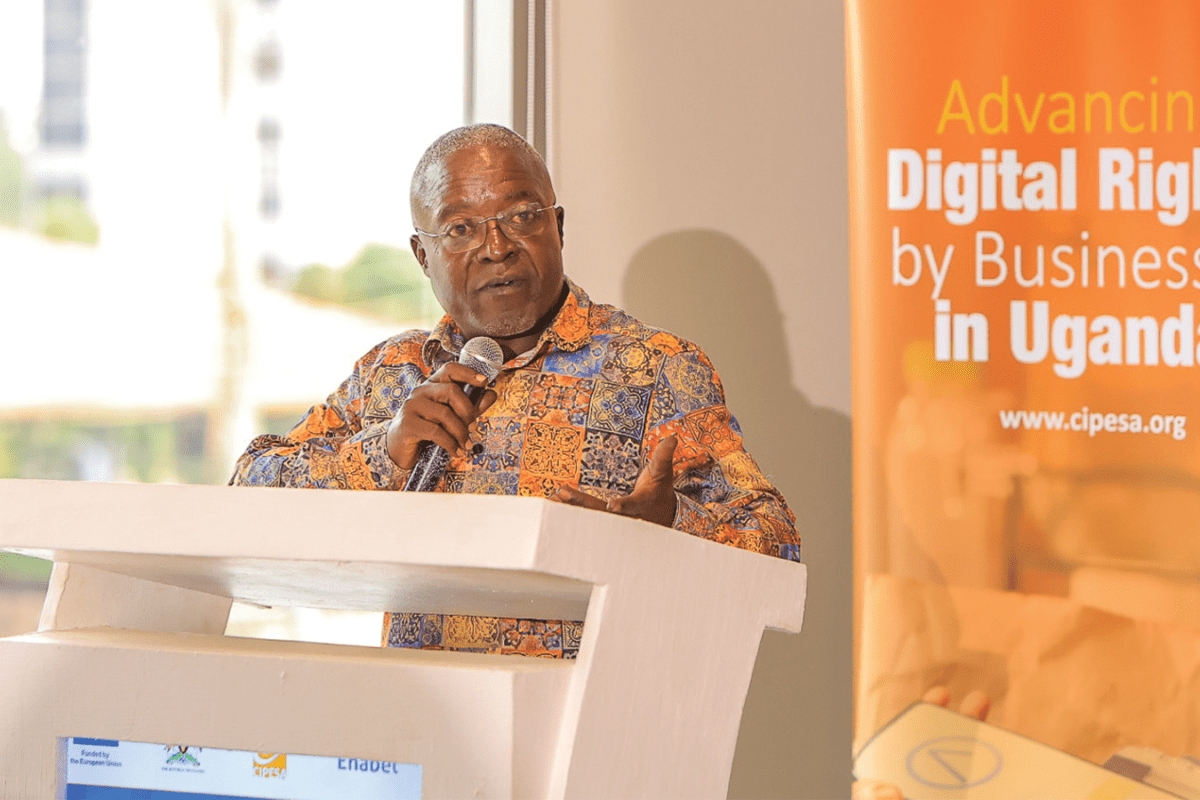
These questions were at the centre of a  High-Level Multi-Stakeholder Dialogue on Business and Digital Rights convened by the Collaboration on International ICT Policy for East and Southern Africa (CIPESA)  on May 7, 2026, under the Advancing Respect for Human Rights by Businesses in Uganda (ARBHR) project, supported by Enabel and the European Union (EU). The dialogue brought together 81 individuals representing government officials, civil society actors, private sector representatives, researchers, and digital innovators to reflect on the growing recognition that digital transformation is not simply a technical process, but also a governance and human rights issue that demands transparency and accountability.

The discussions at the dialogue revealed a tension between innovation and human rights. Systems such as digital identity (ID), payment platforms, and data-sharing frameworks   centralise enormous amounts of personal data and are reshaping power relationships between citizens, the government, and corporations.

Participants noted that in the absence of strong governance frameworks, these systems can enable exclusion, surveillance, and misuse of personal information. Further,  concerns were raised about fragmented systems across government agencies, weak interoperability, and limited public awareness regarding how personal data is collected, stored, and shared.

Meanwhile, as emerging technologies such AI take hold in the country,  the Uganda National AI Landscape Assessment positions  AI as a key digital technology driver to drive economic growth.

However, the Assessment documents the absence of a dedicated AI policy and regulatory framework, a shortage of AI skills, and insufficient collaboration between academia and the technology sector. Similarly, like its counterpart governments across Africa, Uganda is increasingly investing in DPI systems including digital ID and payment systems,  as well as data exchange frameworks. DPI is being positioned as a key pillar of digital transformation strategies across Africa. However, DPI  systems remain heavily reliant on public data and algorithmic decision-making. Thus, if   designed and deployed without sufficient citizen participation, independent oversight, legal safeguards, and alignment with the public interest, they risk becoming tools of exclusion, exploitation, and foreign dependency.

Various efforts related to the adoption of emerging technologies are underway.  Ambrose Ruyooka, the Assistant Commissioner at the Ministry of ICT and National Guidance, Uganda noted that the Ministry is taking a cautious approach to regulation by prioritising standards, policy guidance, and institutional learning before introducing binding laws. This includes efforts to domesticate the UNESCO Recommendations on the Ethics of AI and a Readiness Assessment process. The dialogue also came on the heels of the Ministry’s call for stakeholder input to the National AI and Emerging Technologies Strategy – signaling a growing policy focus on responsible digital transformation.

Further he stressed that in the midst of AI, stakeholders should not be “passive consumers” of the digital economy but actively “participate in shaping it” while pointing out that participation requires local technical capacity to “build, operate and audit” systems such as AI and DPI systems independently.While government efforts are laying the foundation for AI governance, businesses also have an obligation to innovate responsibly and adopt robust human rights due diligence processes to support regulatory compliance and foster trust and sustainability.

At a broader level, the dialogue demonstrated how digital rights are increasingly intertwined with economic rights and social justice. As a result, corporate responsibility can no longer be limited to traditional labour or environmental concerns. Companies are now expected to consider how their digital operations affect privacy, equality, freedom of expression, and access to information.

This shift is especially significant for Uganda’s small and medium enterprises (SMEs), many of which are digitising rapidly but often lack the resources and expertise needed to manage cybersecurity and data effectively.

Presentations from implementing partners, including the Private Sector Foundation Uganda (PSFU), Evidence and Methods Lab (EML), Wakiso District Human Rights Committee (WDHRC), Boundless Minds, and Girls for Climate Action (G4CA), highlighted both the scale of the challenge and the potential for practical intervention. Partner interventions on digital rights and cybersecurity are strengthening awareness and practices among entities – both rural and urban.

The European Union’s (EU) Commitment to Human Rights in Business

Laurianne Comard, Programme Officer at the EU Delegation to Uganda,  noted that the EU and its member states are currently among Uganda’s largest investors in the private sector, with over 1.4 billion euros deployed to foster sustainable economic growth and high-value exports. Specifically, she stated that the EU supports Uganda’s National Action Plan (NAP) on Business and Human Rights with over 20 billion Uganda Shillings, with a specific focus on strengthening human rights practices in business operations, particularly around labour standards and women’s rights.

Course-Correcting on Inclusion

Participants also noted that public participation in digital governance remains limited. Several civil society actors argued that consultations around national AI strategy have not been broad enough, particularly for rural communities, labour unions, youth groups and persons with disabilities. Frameworks developed without broad public engagement risk lacking legitimacy and failing to address the lived realities of those most affected.

The dialogue also reflected on the NAP on Business and Human Rights and the consultative processes underpinning its evaluation and development of NAP II. Lydia Nabiryo, Assistant Commissioner at the Ministry of Gender, Labour and Social Development, acknowledged that the government is actively working to broaden participation in the NAP’s revision.

Her remarks were a candid recognition that the first NAP, while a significant milestone, left representational gaps, and that those gaps are now being deliberately addressed. She noted, “If you have noticed this time round, we are having a more inclusive dialogue with stakeholders that were not necessarily represented in the first NAP. So, not only is the government evaluating, but we’re also course correcting.”   

Participation should not only be limited to policy processes. Shane Ssenyonga, an innovator, pointed out the need for collaborative spaces that support entrepreneurs and businesses to build scalable solutions that are responsive to social, cultural, and economic realities.

Recommendations for Action

The dialogue called for stronger human rights safeguards and access to remedy within digital transformation strategies and business operations. The strategies should be in harmony with existing digital laws and policies and strengthen oversight and enforcement by relevant institutions. For businesses, adoption of forward looking internal policies and risk management practices was emphasised to ensure trusted deployments and reduce barriers to uptake. Advocacy, documentation, and digital literacy interventions remain critical to public education and compliance monitoring.

CIPESA Annual Report 2025 Highlights Agility in A Changing Funding and Policy Landscape

By CIPESA Writer |

The Collaboration on International ICT Policy for East and Southern Africa (CIPESA) is pleased to present its 2025 Annual Report. Made possible by a wide network of collaborators across Africa and beyond, our work reflects a year marked by agility, resilience, and responsiveness amid rapid shifts in technology, policy, and governance.

Across Africa, governments rapidly expanded the use of artificial intelligence (AI) and Digital Public Infrastructure (DPI), including national digital ID systems, surveillance tools, and e-government platforms, reshaping how power is exercised, services are delivered, and citizens engage with the state. At the same time, digital platforms remained central to political and civic life, amplifying both civic participation and manipulation.

Through our research, advocacy, and partnerships, the report highlights how digital transformation is reshaping everyday life and why protecting civic space and digital rights remains more important than ever.

Over the year, our work moved beyond who participates in digital governance across Africa to strengthening the quality and influence of that participation. We are deeply grateful to all our Network of allies whose support made our 2025 work possible.

In a year marked by significant shifts in the global funding landscape, their continued trust and commitment to digital rights in Africa was both enabling and affirming.

We remain committed to advancing an open, inclusive, and rights-respecting digital ecosystem in Africa, confident that when evidence, advocacy, and collective action come together, meaningful change is possible. Read more on the report below.

CIPESA Annual Report 2025

Lessons from Ethiopia’s Disability Inclusion Conference for Africa’s Telecom Sector

By CIPESA Writer |

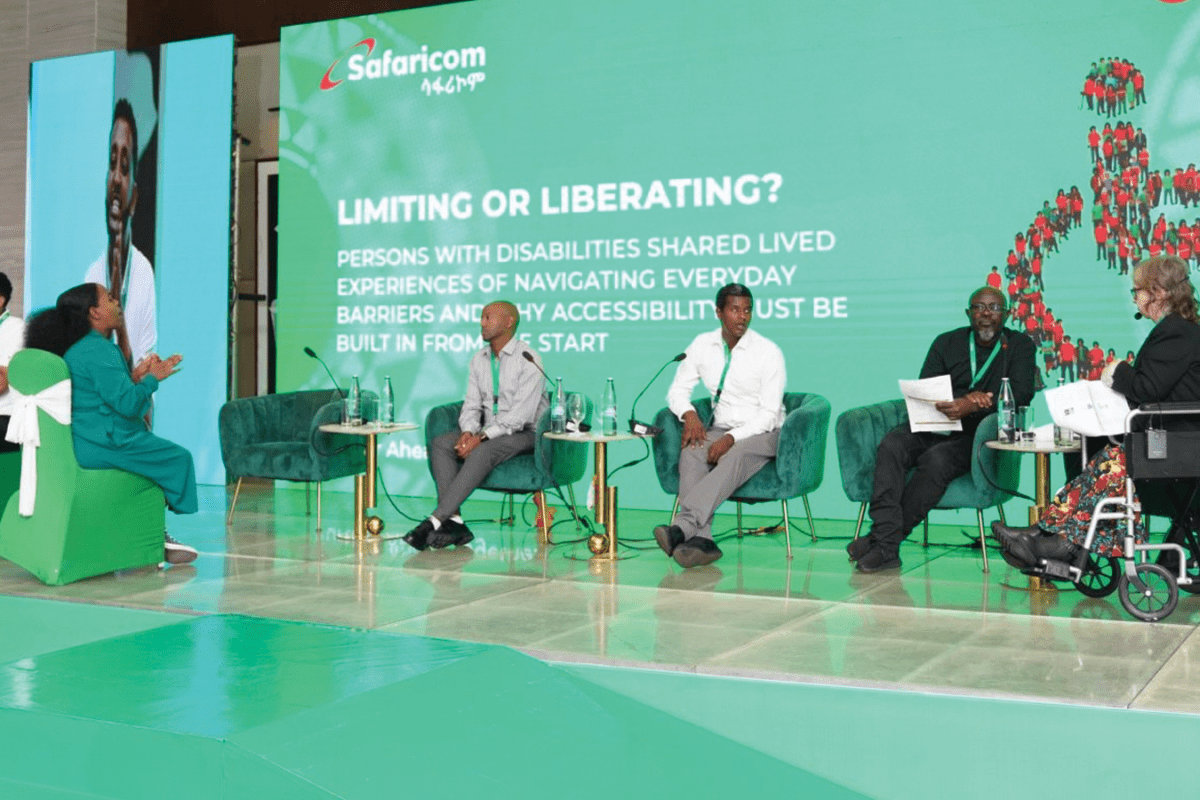
On April 24, 2026, Safaricom Ethiopia Telecommunications convened a Disability Inclusion Conference in Addis Ababa. While opening the conference, Safaricom Ethiopia CEO, Wim Vanhelleputte emphasised the importance of involving persons with disabilities in the design of digital products and services by invoking the principle of “Nothing About Us Without Us.”

The conference, which brought together stakeholders from government, academia, tech companies, Disabled Persons Organisations (DPOs), and civil society, nevertheless highlighted a more persistent reality. For the approximately 15-17 million Ethiopians living with a disability, roughly one in six people, the disconnect between policy commitments and lived reality remains significant in access to services and devices.

As Abayneh Gujo, Executive Director of the Federation of Ethiopian Associations of Persons with Disabilities (FEAPD), noted during the conference, the disconnect continues to affect access not only to digital services, but also to education, healthcare, and economic opportunity. Many other African countries face a similar gap.

A Sector That Continues to Treat Accessibility as Optional
Findings from a CIPESA report, Access Denied: How Telecom Operators in Africa Are Failing Persons with Disabilities, show that major telecom companies across markets in Africa continue to treat accessibility as a secondary consideration. The study assessed 10 telecom companies in Botswana, Kenya, Nigeria, South Africa and Uganda. For example, staff were untrained and often unaware of what accessible products existed. Procurement policies did not require accessibility features, while physical access to sales outlets was poor. Discounted rates for persons with disabilities were virtually non-existent, with only Vodacom South Africa offering them in the form of a modest SMS bundle for customers with hearing impairments.

These shortcomings reflect a sector that has long treated accessibility as optional, often framing it as corporate social responsibility rather than a legal obligation. There has been progress since the report, but it has been driven by individual company initiatives rather than coordinated, sector-wide change anchored in regulatory standards and enforceable requirements.

Even where accessibility features exist, accessible smartphones, assistive technologies and mobile data remain out of reach for many persons with disabilities, especially in rural and low-income settings. This is because access depends not only on whether technologies are available, but whether people can afford to use them consistently over time. Studies, including by the International Telecommunications Union (ITU), identify affordability as a major barrier to digital inclusion, yet telecom pricing and product design still rarely reflect the realities faced by persons with disabilities.

What Ethiopia Must Do
Ethiopia has ratified the UN Convention on the Rights of Persons with Disabilities (CRPD) and has disability-related provisions in existing laws. However, the country still lacks a comprehensive and enforceable disability rights law. Such a law should set clear obligations on telecom operators, broadcasters and digital service providers, including standards for accessible customer care, websites, mobile applications and emergency communications. In the absence of such a framework, accountability rests largely on goodwill.

Beyond legislation, Ethiopia has an opportunity to use its newly established Universal Access Fund, administered by the Ethiopian Communications Authority, to finance accessible digital centres, assistive devices, software, and skills-building programmes for persons with disabilities. As the country expands its digital public infrastructure, such as mobile money, e-government services, and digital identity systems, accessibility cannot remain an afterthought that is addressed only after systems are deployed.

What Telecom Operators Must Do
Based on CIPESA’s research, telecom operators need to prioritise accessibility by establishing an accessibility function at the senior management level, and embedding universal design into products and services from the earliest stages of development. As Karen Smit, Accessibility Lead at Vodacom Group, noted, many of the barriers experienced by persons with disabilities are created not by disability itself, but by how technologies, systems and environments are designed.

Operators also need procurement policies that require accessible handsets to be stocked across outlets, including in rural areas, alongside practical training for customer-facing staff on accessibility and assistive technologies. Regular user experience research with Disabled Persons Organisations (DPOs) should become standard practice rather than a one-off consultation exercise. As Vanhelleputte argued in his opening remarks, inclusion is not about designing for persons with disabilities, but designing with them.

One finding from CIPESA’s research still stands out. Several operators do not have reliable data on the number of customers with disabilities. Disaggregating customer data by disability status is a necessary foundation for any serious inclusion strategy.

Operators should also recognise that accessible design is good business. Captions, voice navigation and simplified interfaces benefit older users, people with low digital literacy and anyone navigating a screen in difficult conditions. Features initially developed for persons with disabilities, such as audiobooks and voice-based tools, have often become popular and proved beneficial to broader groups of users.

Safaricom Ethiopia can build on Vodacom’s accessibility initiatives in South Africa and Safaricom Kenya’s disability employment targets and digital skills programmes to move from commitments to measurable implementation. This includes conducting accessibility audits across retail outlets and digital platforms, improving accessibility across customer service channels, embedding accessibility into services such as M-PESA, and establishing sustained partnerships with DPOs to support ongoing user testing and co-design.

At the Addis conference, Vanhelleputte noted that accessible e-learning, telemedicine and mobile money can help bypass barriers that have historically excluded persons with disabilities from economic and social life.

According to Dr Wairagala Wakabi, the Executive Director of Collaboration on International ICT Policy for East and Southern Africa (CIPESA), the next step for telecom operators is ensuring that these commitments are reflected in everyday customer experience, backed by clear targets, public reporting, and sustained engagement between telecom operators, regulators, government, civil society and organisations of persons with disabilities.

From Commitment to Action
Some civil society actors are doing their part through research, advocacy and sustained engagement. However, this is not a substitute for what regulators, governments and telecom operators are obliged to do through enforceable commitments, clear standards, and measurable implementation.

For Africa’s estimated 260 million persons with disabilities, digital inclusion must stop being a conference theme and start being a measurable reality. As governments digitise banking, identity systems, healthcare and public services, inaccessible digital infrastructure increasingly means exclusion from economic and civic life itself.

CIPESA will continue documenting these gaps, engaging stakeholders, and holding the sector to account until meaningful inclusion is achieved.

Kenya Doesn’t Have an AI Regulation Gap, It Has an Accountability Gap

By Brian Byaruhanga |

Kenya was reported, in a recent global update, to hold the world’s highest rate of Artificial Intelligence (AI) tools usage – 42.1% of surveyed internet-using adults. The figure has travelled quickly. It now adds to a familiar story: Kenya as Africa’s AI frontrunner, sprinting ahead of its regulatory infrastructure, in need of a comprehensive AI law to close the gap. While the claim might seem true, is the story built around it accurate?

The 42.1% does not measure Kenyan AI capability. It measures Kenyan consumption of AI built elsewhere. The chatbots – OpenAI’s GPT, Google’s Gemini, and Anthropic’s Claude – run on compute owned by foreign firms, are trained on data scraped without Kenyan consent, and are monetised in jurisdictions outside Kenya. To call this “adoption” is to mistake dependence for agency. The frontrunner framing flatters us into thinking Kenya is racing, yet, in reality, it is being driven.

Furthermore, AI-powered tools in current Kenyan usage are not only chatbots. They include algorithmic feeds – TikTok’s For You Page, Instagram’s Reels, X’s recommended timeline, YouTube’s autoplay, and Facebook’s News Feed, used by the country’s 18.4 million social media users. These algorithms shape the perception of information consumed by every Kenyan on social media. Most users do not experience or recognise these systems as AI. They experience them as the internet. That is the most pervasive form of AI adoption: Kenyans do not need to log into an AI chatbot to be governed by foreign machine-learning systems; they need only to scroll.

In 2022, a Mozilla investigation by Odanga Madung showed how TikTok’s For You Page algorithm boosted election disinformation in Kenya far beyond the reach of any individual post – proof that recommender systems are themselves political infrastructure. The 2025 State of Internet Freedom in Africa report flags this issue, directly pointing out that algorithmic recommendations, content curation, and automated moderation “profoundly affect how citizens access news, engage politically, and mobilise digitally.” Yet, this usage is not factored in as part of the 42.1%, and neither does the recently proposed Kenya AI Bill 2026 provide an oversight or regulatory mechanism to address the potential harms.

This is where Kenya’s emerging AI governance architecture, as outlined in the Bill, the National AI Strategy, and the regulation-versus-innovation commentary that frames them, falls short. In treating AI as a commodity, Kenya is integrating – a thing to be permitted, audited, and made fair. But the labour that trains these systems is Kenyan: the data annotators in Nairobi’s outsourcing centres, the moderators who absorbed the worst of OpenAI’s training data for less than two dollars an hour, and the gig workers whose human feedback shapes what foreign models call “alignment”. That extraction predates the 42.1% figure and, in many ways, produces it, yet safeguarding the risks to these workers has not been prioritised.

In June 2024, during the #RejectFinanceBill protests, Kenya experienced a nationwide internet disruption that the Communications Authority denied it planned, which telecoms attributed to undersea cable cuts, and that NetBlocks and Cloudflare confirmed. The Kenya National Commission on Human Rights subsequently documented at least 82 abductions and enforced disappearances of digital organisers. These events were routinely framed as exceptions, an unfortunate moment of overreach.

The internet disruptions and the abductions were not just exceptions. They were fundamental to the design of Kenya’s executive-security-telecoms nexus, i.e., the Interior and ICT ministries, the Communications Authority, the National Intelligence Service, the National Cyber Crimes Coordination Committee (NC4), the Directorate of Criminal Investigations (DCI), and some licensed mobile operators and internet service providers (ISPs) acting in concert as a single discretionary instrument of the state. An apparatus that can track and disappear activists and protestors, deny a shutdown that it instituted, is the same apparatus that will play a key role in determining what AI deployments are permitted and how citizens can use it safely.

The same Communications Authority that suspended Telegram sits inside the country’s AI governance ecosystem. The same security apparatus that disappeared activists is responsible for the biometric surveillance systems that the National AI Strategy declines to prohibit. These institutions will oversee the enforcement of any AI law passed in 2026. A regulatory framework that does not address the behaviour of its enforcers is flawed.

Another shortfall is the plea in nearly all Kenyan AI discourse: to “balance innovation and regulation”. Innovation in Kenya is not endangered by regulation. It is endangered by foreign capital concentration, undersea cable bottlenecks, and the migration of local talent to international firms. Far from being a hindrance, regulation is a vital tool for oversight and asserting sovereignty. Instead of weighing regulation against innovation, the focus should be on the tension between sovereignty and access – two areas currently dominated by the same powerful interests and left unprotected by frameworks that fail to identify extraction for what it truly is.

What, then, does honest governance look like?

AI Governance for Kenya and Africa as a whole should look like a gate, a pre-deployment review mechanism where data access is a privilege earned through evidence rather than a courtesy extended in advance. The non-negotiable is an independent authority with the power to halt or redesign deployment when non-compliance is found. Not advised. This should apply as much to recommender systems already operating inside Kenya as to new models entering the market. An AI law that cannot reach the algorithmic curation layer of TikTok, Meta, and X has already exempted the largest category of AI affecting Kenyans. The current draft of the AI Bill fails to establish such authority.

While apprehensions regarding censorship, over-regulation and enforcement capacity are valid, the lack of a halt mechanism remains a more critical flaw. Although the draft National AI Strategy mentions governance, it fails to identify the ultimate decision-maker. Until that authority is clearly defined, Kenyans are merely debating form rather than addressing the core substance.

Kenya does not have an AI regulation gap. It has an accountability gap, and AI is the new vector through which that gap widens. The proper question is not ‘How do we govern AI?’ but ‘How do we govern the institutions that will govern AI?’ A “human-centred design” is not a complete answer. The answer begins by rejecting the frontrunner story, naming the extraction, tying the June 2024 shutdown to the architecture rather than the cable, and reserving the word ‘sovereignty’ for governance that can actually halt an AI deployment when the evidence requires it. Ultimately, introducing new AI laws into a system that already lacks institutional checks and balances will not protect citizens; rather, AI will just become a new vector through which state overreach expands unchecked.

Zimbabwe’s National AI Strategy: Policy Lessons for Africa

By Edrine Wanyama |

Zimbabwe recently adopted its National Artificial Intelligence (AI) Strategy 2026–2030 (AI strategy)  to guide digital technology and transformation in the country. The strategy aims to accelerate development, enhance industrialisation, and improve service delivery in sectors such as health, finance, agriculture, education and public administration. The strategy emphasises building local data infrastructure as opposed to relying on foreign data storage infrastructure while promoting an AI governance approach grounded in Ubuntu, human rights, accountability, transparency and inclusivity.

However, an important question is whether Zimbabwe’s approach offers useful lessons for other African countries developing national AI strategies.

Lessons for Other African Countries

The country’s AI strategy is organised around six pillars that together map a practical path for AI adoption and deployment. First, AI talent and capacity development is essential for ensuring that institutions have the skills needed to implement AI effectively. Second, AI infrastructure and computational sovereignty are necessary for ensuring digital and data sovereignty. Third, AI adoption and service transformation are critical for supporting the integration of AI across public and private sectors to improve their productivity, accountability and transparency.

The fourth pillar, AI governance, ethics and regulation, is essential for building public trust and creating a framework that supports responsible innovation. The fifth pillar, AI research, development, and innovation, can drive investments, expand knowledge production and strengthen academic output. The sixth pillar, strategic international collaboration, presents an opportunity for global partnerships with key players and stakeholders, technology exchange, and potentially greater investment.  

Consequently, these pillars offer useful lessons for other countries seeking to harness AI for socio-economic transformation while protecting data rights and data sovereignty.

Alignment with the African Union (AU) AI Strategy

Zimbabwe’s AI Strategy reflects several priorities contained in the AU Continental Artificial Intelligence Strategy, particularly the emphasis on coordinated AI governance, digital sovereignty, and sectoral innovation. Zimbabwe’s strategy aims to harmonise the deployment and use of AI across sectors such as health, finance, agriculture, education and public administration through common governance benchmarks for AI governance. If implemented effectively, these goals could help to address digital neo-colonialism, an issue that has been dominant in Africa’s technological space.

The Strategy also places strong emphasis on AI as a tool for socio-economic development, aligning with Agenda 2063 and the Sustainable Development Goals (SDGs), particularly in sectors such as health, agriculture, and education. The Strategy promotes the deployment of AI to improve agriculture through crop disease prevention, as well as mining and mineral development, which is consistent with the AU AI strategy’s priorities on resource optimisation and climate resilience.

However, Zimbabwe faces significant governance and implementation challenges. The country scored 0 in the 2024 Global Index on Responsible AI Governance, highlighting the gap between policy ambition and institutional readiness. This means it requires major actions to implement the strategy, such as the establishment of robust legal safeguards, accountability mechanisms, oversight institutions, and rights-based governance frameworks, which are also emphasised within the AU strategy.  Other African countries can draw lessons from Zimbabwe’s approach, such as the need to complement AI strategies with stronger governance capacity, clearer regulatory safeguards, and more coherent data governance frameworks to support responsible and accountable AI deployment.

UNESCO Guidance on AI

The UNESCO Recommendations on Ethics of Artificial Intelligence, adopted in 2021, is a global normative framework that promotes human rights, including human dignity, transparency, fairness, human oversight in AI systems, and democratic participation. It also provides practical policy action areas covering issues such as data governance, gender, education and research, health, and social wellbeing.

While the UNESCO Guidance is emphatic on ethical and privacy considerations, Zimbabwe’s strategy falls short. Ambitions to integrate AI into public service delivery sectors such as education, health, and public administration will require stronger safeguards to ensure alignment with the human-centric principles articulated in the UNESCO framework. In the age of AI, data security concerns, intellectual property rights, algorithmic bias, and institutional accountability are central to responsible deployment of AI and require clearer policy and regulatory attention.

Similarly, the UNESCO Guidance warns against the use of AI in a manner that undermines democratic participation, civic engagement, and collective decision-making. This is especially important in contexts where surveillance technologies such as facial recognition, drone monitoring, communication tracking, and social media surveillance are deployed without clear safeguards or independent oversight. Zimbabwe, like several other African countries, has invested in AI-enabled infrastructures, such as the “smart city” systems to monitor and surveil citizens in ways that are opaque and lack clear accountability mechanisms.

As African countries continue developing national AI strategies and governance frameworks, they must strive to ensure that the deployment of AI is transparent, publicly accountable, and pays close attention to ethical and human rights standards. Without these safeguards, AI risks reinforcing exclusion, surveillance, and digital authoritarianism rather than advancing development.

Conclusion

Zimbabwe’s adoption of an AI Strategy is an important step toward advancing tech-enabled digital and socio-economic transformation. It also reflects the country’s intent to align national priorities with the African Union’s vision for AI-driven development across the entire continent. However, for such strategies to be effective and legitimate, they must be grounded in ethical and human rights standards laid down in regional and international benchmarks.